Anamorphic Kaleidoscopist
An ambiguous, multi-faceted construction by Oskar Zięta that absorbs its surroundings through reflection. A form of multiple contexts, a tool for bending reality. Drawing on the mirror-like properties of stainless steel, Zięta once again constructs a machine of reflections.
Aberrator is an optical system made of metal, travelling through the urban fabric, through doubts, through moments. On this journey, it stopped beside a wall. A wall with a raster. A moving wall. A hypnotic wall — temporarily, or perhaps not, it has taken refuge within the spaces of the Academy of Fine Arts in Warsaw, under the watchful eye of Zięta and Goworek.
Aberrator is an optical system made of metal, travelling through the urban fabric, through doubts, through moments. On this journey, it stopped beside a wall. A wall with a raster. A moving wall. A hypnotic wall — temporarily, or perhaps not, it has taken refuge within the spaces of the Academy of Fine Arts in Warsaw, under the watchful eye of Zięta and Goworek.
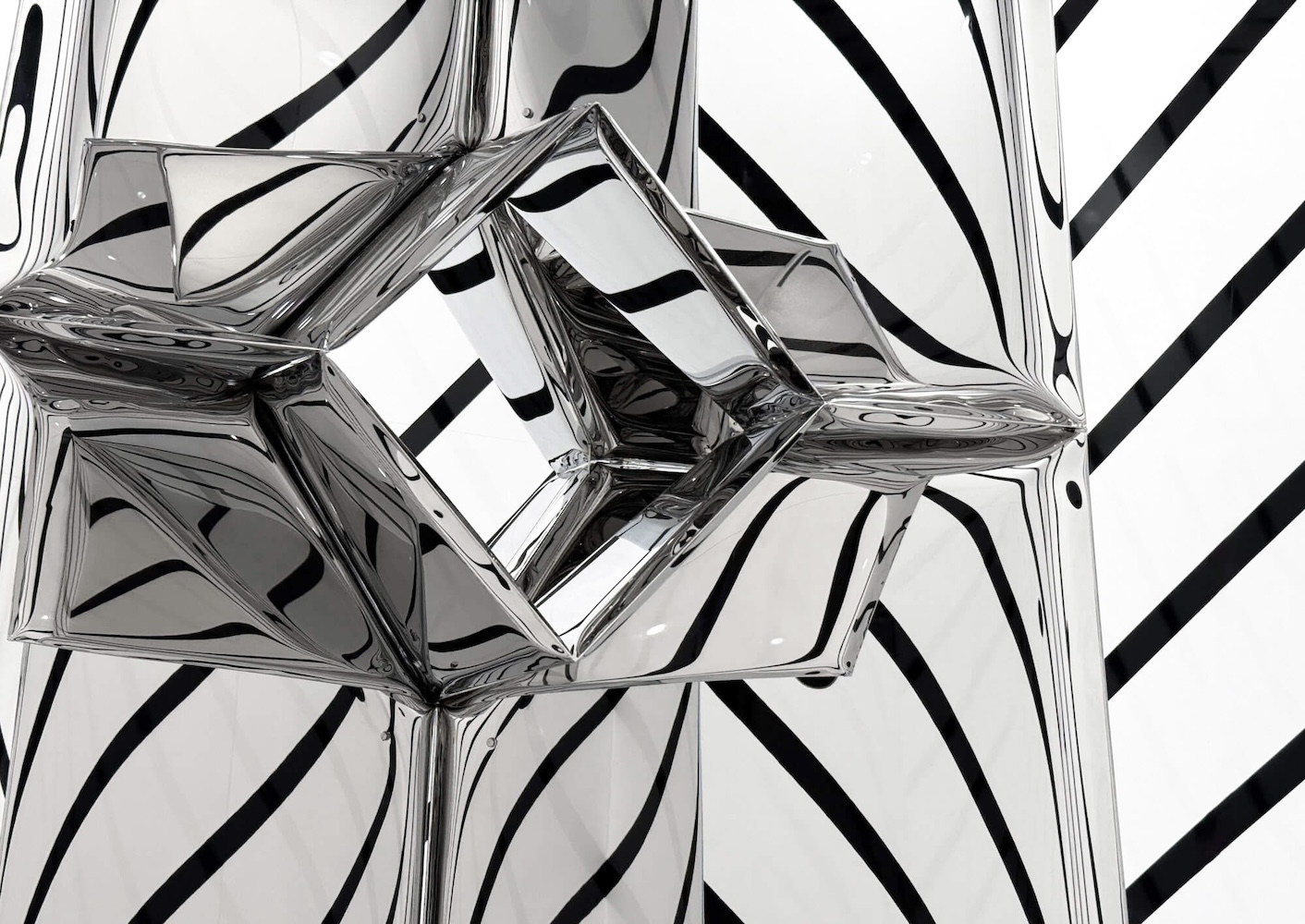
Within the Wall — a space constructed according to the logic of catoptrics — Aberrator is deprived of the right to a single perspective. A small opening leads into an arrangement of FiDU steel forms, where multiple reflections do not lead back to a source image, but set off a succession of transformations.
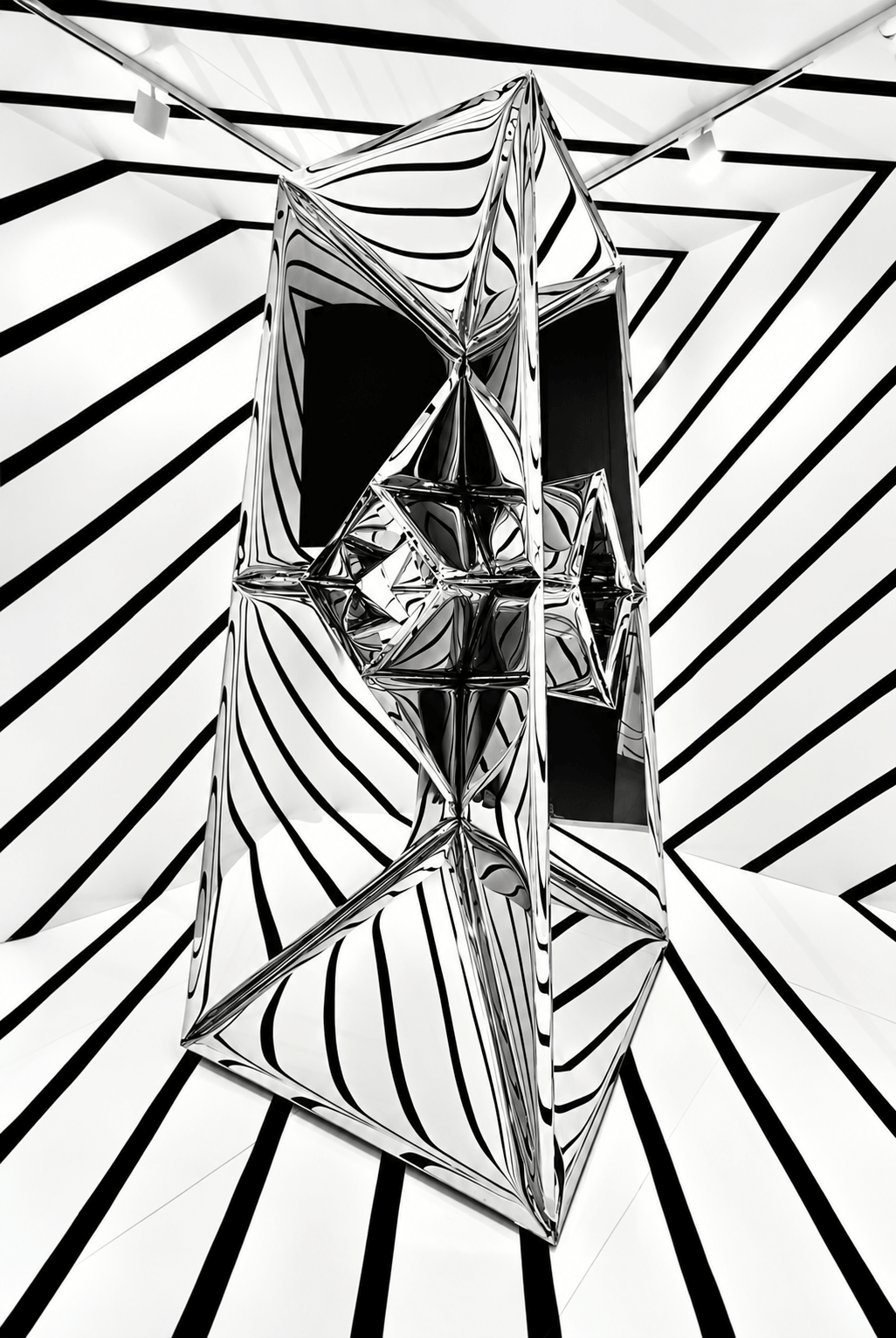
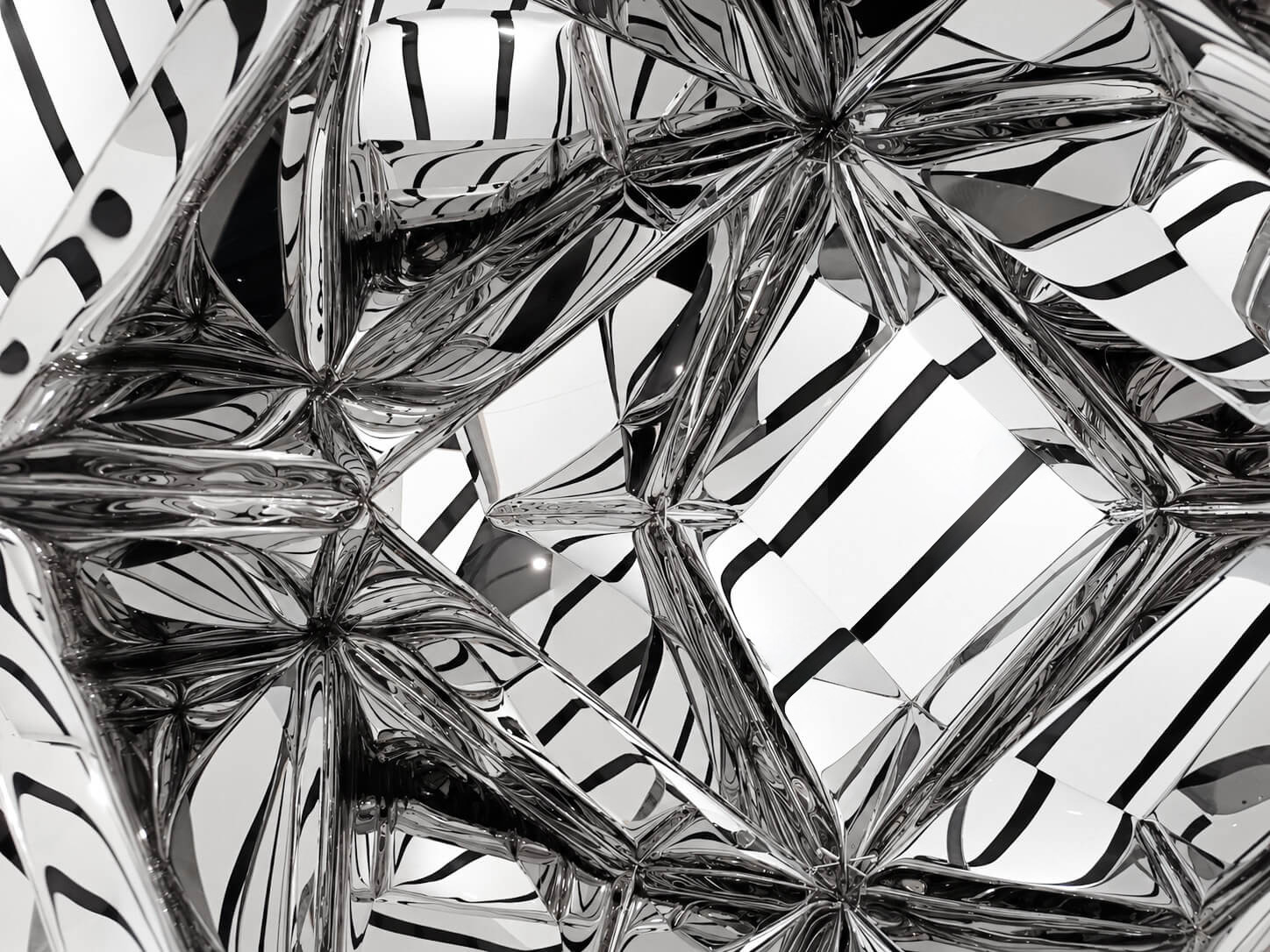
In classical anamorphosis, there is a privileged viewpoint from which a distorted image recovers its intended form. New Anamorphosis rejects this privilege. There is no point from which the image becomes true. Moving the observer does not restore reality — it produces its next version. The viewer is therefore not positioned before the object, but becomes part of its optical system. Their body, their position and their movement co-create the image.
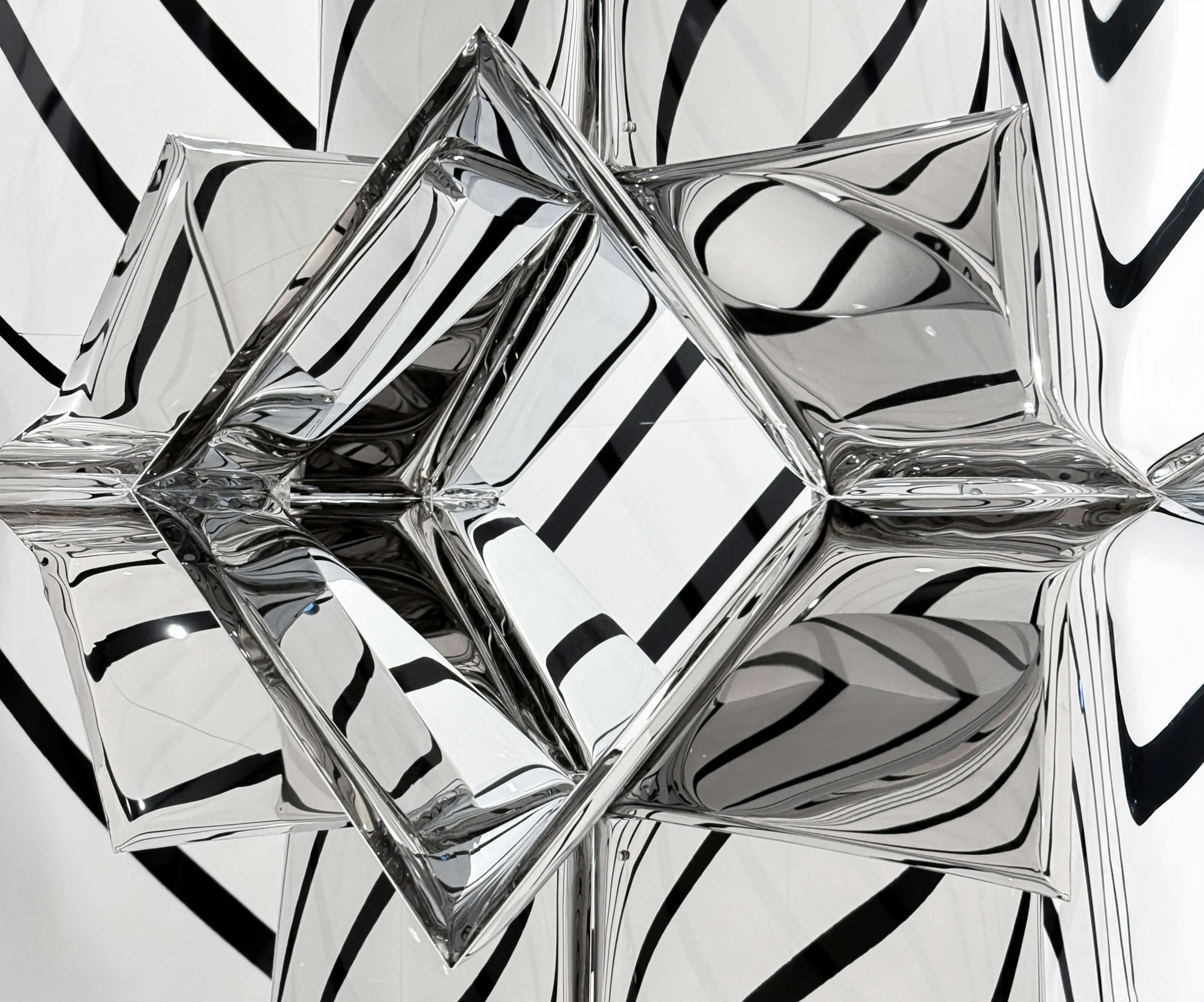
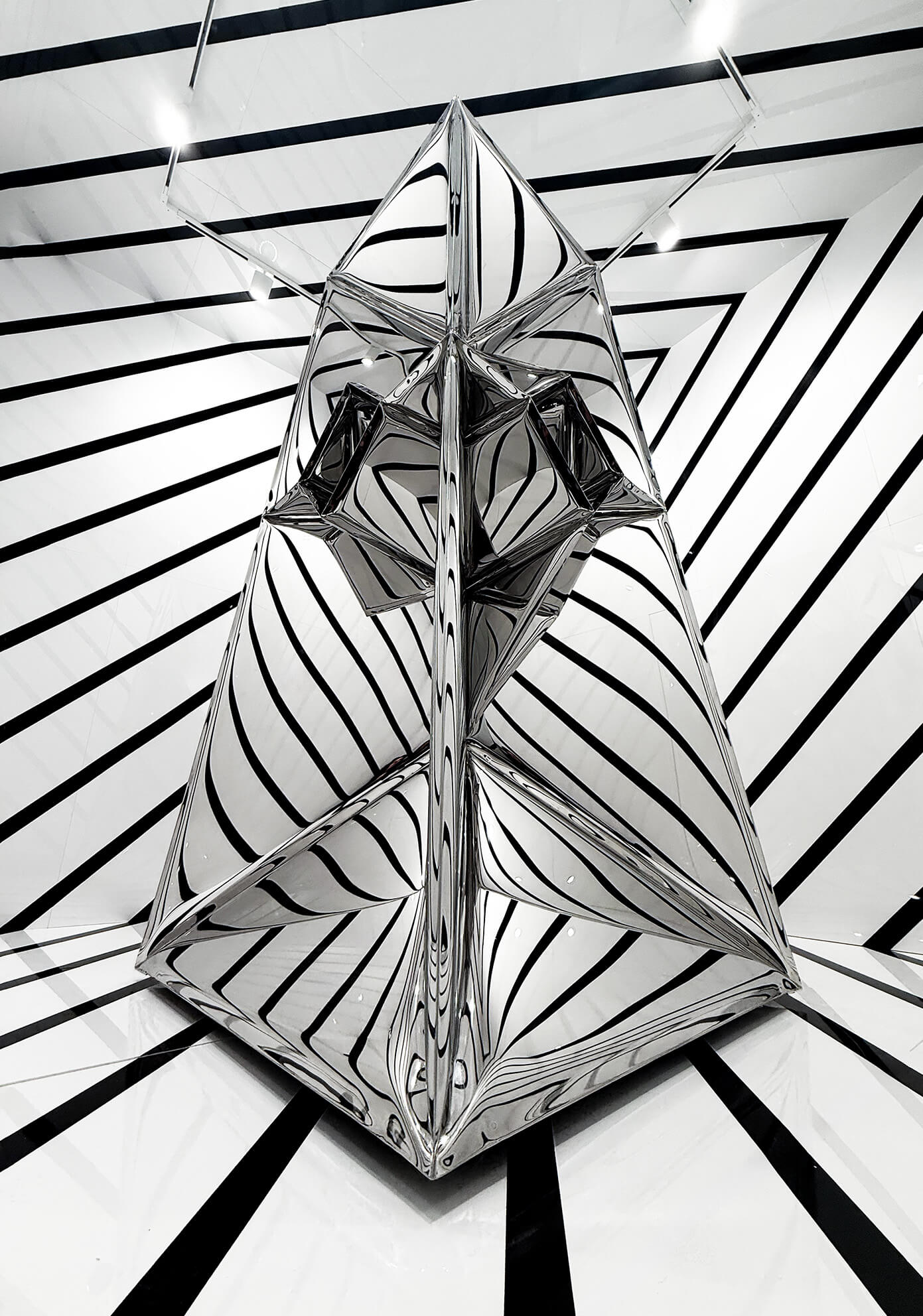
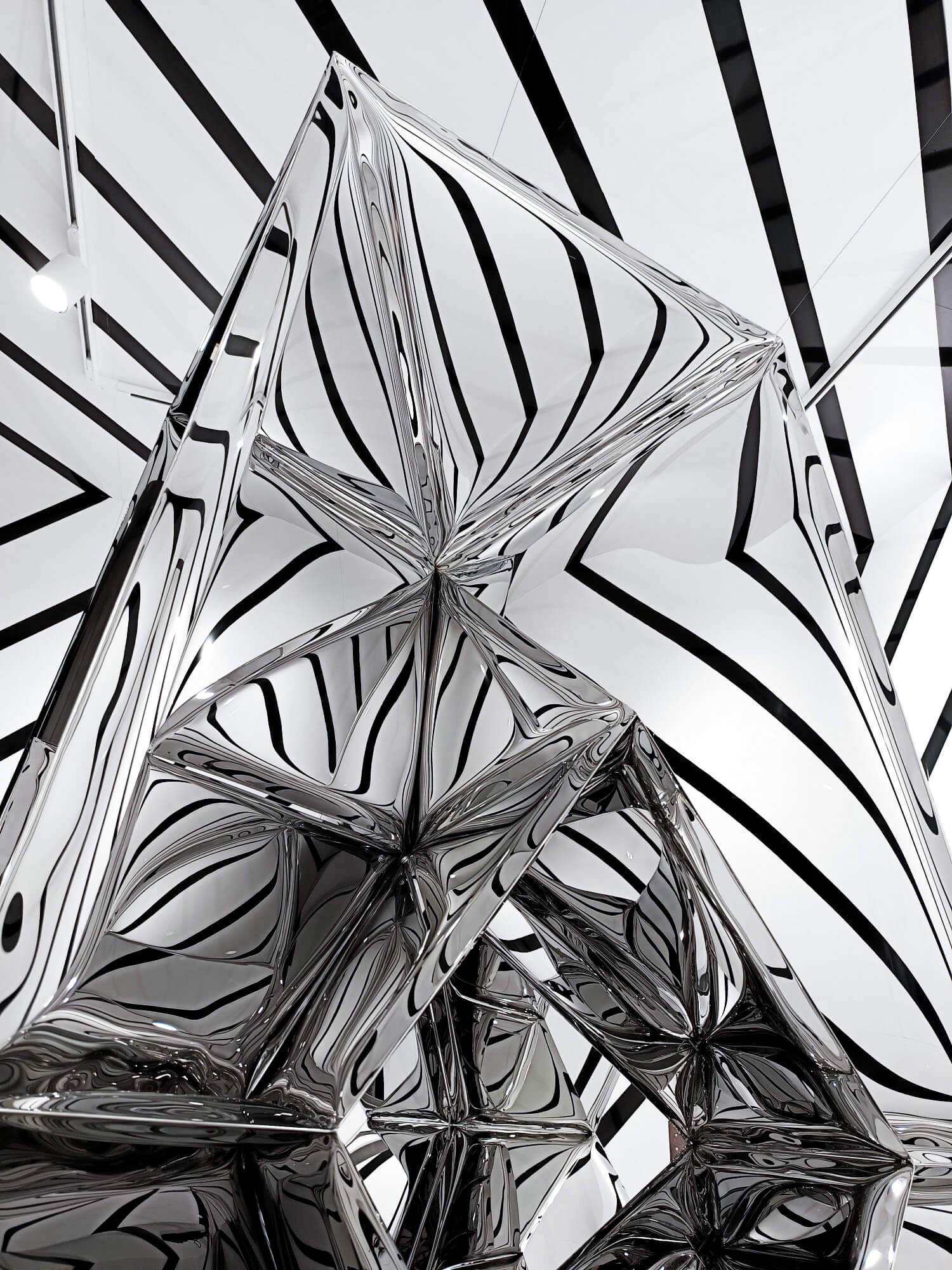
In Aberrator, FiDU moves from shaping matter to shaping visibility. The technology becomes a tool for constructing optical uncertainty. The geometry of the metal determines the geometry of the reflection, and the geometry of the reflection determines the limits of what can be seen. Aberrator is not a mirror, because a mirror sustains the illusion of correspondence between image and reality. Nor is it a kaleidoscope, because it needs no pattern in order to multiply it. It is an anomaly of vision — an aberration.